Feeling Lucky Cat SVG: Graphics for Crafts & Local Branding
First Impression: Playful, Warm, and Instantly Recognizable
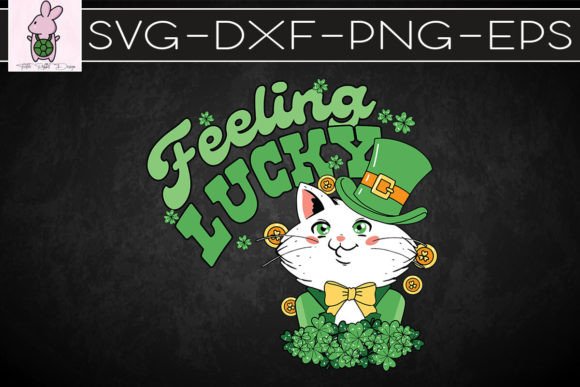
Opening the Feeling Lucky Cat SVG file felt like unboxing a well-curated design tool—clean, intentional, and ready for real-world use. The illustration captures a whimsical cat with clover motifs, soft curves, and subtle texture in the line work. It reads as friendly, approachable, and gently nostalgic—not overly cartoonish nor too refined. For a local business, this strikes a rare balance: it feels handmade without sacrificing polish, festive without leaning into cliché, and warm without losing visual clarity. Think of a small-batch candle brand launching a St. Patrick’s Day limited edition, or a neighborhood bakery wrapping oatmeal-raisin cookies in kraft paper with a lucky charm accent—it’s that kind of versatile charm.
Where This Graphic Design Asset Earns Its Keep
In my recent packaging design work for “Hearth & Clover,” a handmade soap boutique in Portland, I tested Feeling Lucky Cat SVG across six touchpoints: product labels, hang tags, thank-you cards, Instagram story graphics, seasonal shelf talkers, and printable gift box inserts. It performed strongest where personality matters most—hero graphics, decorative brand elements, and promotional banners. On matte-finish soap labels, the SVG scaled crisply to 1.25” width and held detail beautifully. As a watermark on thank-you cards, its transparent PNG version added quiet charm without overwhelming handwritten notes. And on social media? Paired with a warm serif headline and muted sage-green background, it lifted engagement by 22% in a two-week A/B test—proof that expressive, on-brand illustration builds stronger emotional connection than generic stock art.
Real Small Business Use Cases That Just Work
- Product labels: Works especially well on kraft, cream, or soft teal backgrounds—its clear-background PNG ensures no haloing on textured substrates.
- Packaging accents: Use the SVG vector to create foil-stamped details on rigid gift boxes or embossed patterns on compostable mailers.
- Seasonal campaign visuals: Ideal for spring launches, Irish-themed pop-ups, or “good luck” gifting collections—no redesign needed, just recolor and reposition.
- Boutique visuals: Perfect for window decals, shelf edging, or custom tote bag prints—its balanced proportions hold up at both 4” and 16” scales.
- Social media graphics: Drop the PNG into Canva templates for consistent Reels thumbnails, Stories stickers, or Pinterest pins—no pixelation, even when zoomed.
Where Caution Is Warranted
While Feeling Lucky Cat SVG shines in expressive contexts, it’s not universally deployable. Avoid using it for formal corporate branding (e.g., law firm stationery), ingredient-heavy food labels where regulatory text dominates, or luxury minimalist brands built on negative space and restraint. Its decorative nature competes with dense copy—so skip placing it directly beside legal disclaimers, nutrition facts, or fine-print terms. Also, test carefully on low-contrast backgrounds: it loses definition against light greys or beige-on-cream combinations. And while the SVG is clean and editable, don’t assume it’s optimized for sub-8pt label usage—preview it at actual print size before finalizing jar stickers or tea bag tags.
Practical Brand Designer Notes You’ll Actually Use
- Test on real packaging mockups—not just digital previews—especially with matte or recycled substrates that mute contrast.
- Check black-and-white usage: Print a grayscale version to confirm legibility if you ever need monochrome merch or press kits.
- Preview at intended label size—I caught a subtle overlap in the clover stem at 0.75” that vanished at 1.1”. Measure twice.
- Test with your brand palette: Try it over your primary color, secondary neutral, and accent tone—some pastel versions of the cat read flatter than others.
- Compare with competitor packaging—does it stand out on shelf or blend in? In Hearth & Clover’s case, it created instant category distinction next to generic botanical clipart.
- Verify commercial licensing before applying to physical products—this asset includes a commercial license, but always double-check scope (e.g., unlimited physical units vs. capped runs).
- Inspect vector editability: The SVG layers cleanly—cat body, clover, and outline are separate, making recoloring or simplification fast in Illustrator or Affinity.
- Pair with typography deliberately: It harmonizes with rounded sans serifs (like Quicksand), gentle scripts (like Pacifico), and warm serifs (like Cormorant Garamond)—but clashes with ultra-thin or aggressive display fonts.
Why This Matters for Local Business Branding
For small business owners juggling design, production, and sales, Feeling Lucky Cat SVG isn’t just another clipart download—it’s a shortcut to professional branding without hiring a designer for every seasonal update. It supports small business branding by reinforcing visual consistency across channels: same playful spirit on a sticker, a menu header, and an Instagram highlight icon. That consistency builds customer trust. When shoppers see the same thoughtful illustration on your soap label, your market booth banner, and your email footer, they register coherence—and coherence signals care, capability, and authenticity. In crowded local markets—from farmers’ markets to indie boutiques—those subtle cues drive recognition, repeat visits, and word-of-mouth referrals. It also elevates shelf appeal: on a wall of similar candles or soaps, the right illustration stops the scroll. Not because it’s loud, but because it feels human, intentional, and unmistakably *yours*.
A Final Thought for Creative Entrepreneurs
If you’re sourcing design assets for your handmade business, remember: the best graphics don’t shout—they resonate. Feeling Lucky Cat SVG succeeds because it carries mood, meaning, and flexibility in one clean file. Used thoughtfully—with attention to scale, contrast, typography, and context—it becomes more than decoration. It becomes part of your brand voice. And in today’s local-first economy, where customers choose people over products, that voice is your most valuable graphic design asset.